

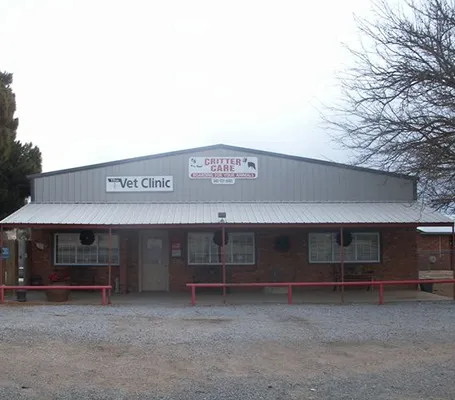
Welcome to Critter Care Vet Clinic
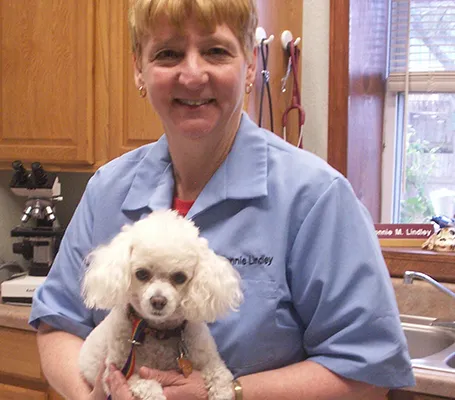
We are committed to the care of your pet and to you by providing friendly and medically sound pet health care. Dr.Connie Lindley has over 30 years of experience. The latest medical technology and procedures are used to provide quality health care for your pet!
Visit us today, because we care about your pet!
We have a number of resources for you to learn about how to take better care of your pets. Browse around and look at our articles and pet videos. The best veterinary care for animals is ongoing nutrition and problem prevention. If you want to ask a question call 940-937-6065 and we'll promptly get back to you. Our Childress veterinarian office is very easy to get to, and you can find directions on our Contact Us page.
Emergency Care
Emergencies cause immediate concern and is life threatening. Examples include, struck by a vehicle, fighting with other animals, gunshot, poisoning, heatstroke, excessive bleeding, profuse vomiting/diarrhea which persists for 24 hours or more, convulsions/seizures, respiratory problems, and excessive pain causing crying and lameness. PLEASE REMEMBER EMERGENCIES ARE FOR EMERGENCIES ONLY!
Critter Care is not a 24/7 emergency clinic. If it is after hours and a response has not been made in a timely manner, please seek emergency help at emergency facility( Wichita Falls, Lubbock, Amarillo, Abilene).
Emergencies during office hours call (940) -937-6065


ePET HEALTH PORTAL
Log onto our ePet Health portal to access all your pet health records, including vaccination status!

Contact us to request an appointment today.
Meet Our Doctor
-
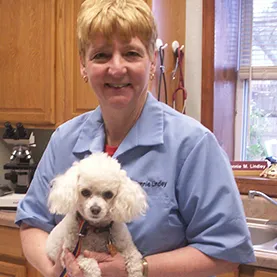 Dr. Connie Lindley DVM,PhD, MPH
Connie M. Lindley, DVM, PhD, MPH Dr. Connie M. Lindley obtained from Texas A&M University, College Station, her Doctor of Veterinary Medicine degree in 1978 and a PhD in Veterinary Physiology & Pharmacology in 1990. Dr. Lindley completed her Masters of Public Health in 1998, from the University Of North Texas Health Science Center in Fort Worth.
Testimonials
Hours of Operation
9am - 12pm
1pm - 5pm
9am - 12pm
1pm - 5pm
9am - 12pm
1pm - 5pm
9am - 12pm
1pm - 5pm
9am - 12pm
CLOSED
CLOSED
CLOSED
CLOSED
CLOSED
Our Location
Critter Care Vet Clinic
406 19th NW
Childress, TX 79201
